|
| |
| |
| | |
|
Threshold: The Edge of Growth and Performance
|
| | | |
| | |
| Welcome to Our Latest Newsletter!
📚 Read Time: 10 Minutes
Every feat of growth, every personal record, and every breakthrough moment shares one thing in common: it happens at the threshold. This is the point where your comfort ends and real challenge begins, the thin line between sustainable and unsustainable effort. In training, the threshold is when your muscles and lungs start to protest; in life, it’s when your mind and will are tested.
Threshold isn’t simply a point of failure, it’s the gateway to adaptation. Cross it, even briefly, and you trigger change. Stay safely behind it, and you plateau. As author Alex Hutchinson observes, “achievement is not possible without discomfort”. Threshold is exactly that productive discomfort, the crucible where progress is forged.
In this week’s deep dive, we explore threshold from all angles: what it means physically and mentally, how it works in the brain and body, key stats on why training your threshold pays off, and how to apply the concept in your own fitness and resilience journey. From the science of lactate and pain tolerance to the mindset of pushing limits, we’ll show why finding your threshold (and gently expanding it) is key to reaching your potential. Let’s step up to the edge.
🔗 Want to revisit past editions or share with someone who could use this?
Check out the full Tiger Resilience archive and share to sign up for future newsletters here:
👉 Explore the Tiger Resilience Newsletter Library |
| | | |
| | |
| 🧭 What Is Threshold?
Threshold literally means the point at which something begins or changes. In everyday terms, it’s a limit or tipping point. Here’s how “threshold” plays out across different domains of human experience:
🧪 Scientifically: Threshold is a boundary in a system where a new reaction or state kicks in. For example, there’s a threshold in exercise intensity at which lactate begins to accumulate in the blood, cross it and fatigue accelerates. There are sensory thresholds for perception (the quietest sound you can hear), and biological thresholds, like the minimum stimulus needed to trigger a nerve impulse. In essence, it’s the minimum intensity required for something to happen. Below threshold, nothing changes; above it, everything changes.
🧠 Cognitively: Mentally, threshold can mean the limit of your comfort zone or skill. It’s the point where easy becomes hard, when a problem starts to feel just beyond your current mental capacity. Learning thrives at this threshold: if you only do what’s easy, you stagnate, but if you take on challenges slightly beyond your mastery, you grow. There’s also a decision threshold in the brain, a level of evidence or urgency at which you finally choose to act. Pushing your cognitive threshold means expanding how much complexity or focus you can handle before you feel “maxed out.”
💬 Emotionally: We all have an emotional threshold, the point where stress, discomfort, or pain becomes too much to bear. It might be the amount of pressure you handle before you snap, or the level of vulnerability at which you begin to shut down. Emotional threshold isn’t fixed; it changes with context and training. Through reflection, therapy, or adversity, you can raise your threshold for difficult feelings, meaning you don’t get overwhelmed as easily. A higher emotional threshold means you can stay composed and present in situations that used to rattle you.
🌱 Holistically: Threshold is the gateway to growth. It’s that moment in a workout, a project, or a personal challenge when you think, “I can’t do much more.” How you respond there determines whether you stagnate or adapt. Holistically, living at your threshold means embracing a lifestyle of pushing just past your perceived limits (with wisdom and balance). It’s not about reckless overload; it’s about intentional stretching, gradually expanding the range of what you can do and tolerate. All major transformations involve crossing a threshold: stepping into the unknown where you’re not fully comfortable. As such, threshold also represents a kind of rite of passage from who you are to who you could be.
Bottom line: Threshold is the boundary between where you are and where growth happens. It’s a trigger point, whether for muscle adaptation, learning, or resilience. Our goal is to recognize these points and gently push them wider. The magic (and the struggle) lies at the edge. |
| | | |
| | |
| Michael’s Perspective: The Real Threshold Lives Upstream of Physiology
When I think about threshold, my default is always the physiology, LT1, LT2, metabolic crossover, what’s happening under the hood. And if anyone wants that breakdown, it’s already sitting in the Training Corner.
But the longer I train, and the longer I coach, the more obvious it becomes that the real limiter isn’t physiological. It’s mental.
You can have the fitness. You can have the aerobic base. Your body can be fully prepared. But if your internal capacity to meet discomfort hasn’t been trained, you’ll never touch what your physiology is capable of producing. The mind will tap out first.
I saw this clearly on Saturday watching my fiancée run 24 miles, something that nine months ago wasn’t just out of reach for her, it wasn’t even in her imagination. But she didn’t hit that distance because she suddenly became a different athlete. She hit it because her mental threshold had been rising quietly for months.
And that’s the part people skip when they talk about “mental toughness.” They think it’s this dramatic, heroic moment where you push through pain. But that’s not how threshold actually works.
Threshold is built upstream, in the small, unremarkable decisions you make every single week.
For her, it showed up in all the places no one pays attention to:
the easy runs she did even when she didn’t feel like it,
the strength sessions she stayed consistent with,
the interval days where doubt showed up but she didn’t bail,
the willingness to be uncomfortable without treating it like a crisis.
Those moments didn’t look special, but they were exactly where her capacity was rising.
I’ve started thinking about “mental threshold” in four practical components, not philosophical, not motivational, just the real factors that determine whether someone can stay composed when the effort gets uncomfortable:
(1) Consistency > intensity.
Your brain adapts to what you do repeatedly. You don’t build threshold from rare big efforts, you build it from steady exposures to effort, stress, and follow-through. That’s why the boring stuff matters.
(2) Internal focus.
Threshold rises when you can actually hear your own internal dialogue and keep it grounded. Not hype. Not self-bullying. Just being aware of what’s happening in your head and steering the effort instead of reacting to it.
(3) Comfort with discomfort.
Not in a macho way, in a regulated way. Being able to stay with discomfort without spiraling, catastrophizing, or abandoning the moment. It’s the skill of staying in the pocket long enough to realize nothing bad is happening.
(4) Preparation creates belief.
When you’ve done the work honestly, you don’t need theatrics. You meet hard efforts with stability, not panic. That stability is what lets you access your physical capacity instead of shutting down early.
Those four components were exactly what showed up during her run. When she hit tougher patches, and there were plenty, she didn’t “muscle through” them. She stayed with the effort. She used the internal routines she’d been practicing for months. She trusted the preparation, not some motivational spark.
And that’s why she finished something she once thought she couldn’t even attempt.
It reminded me that threshold, mental or physical, is rarely about the big moment. It’s the quiet, cumulative work that raises your floor so the hard stuff doesn’t feel like a threat anymore.
That’s where the real change happens.
Not at the edge itself, but in everything you do leading up to it. |
| | | |
| | |
| Bernie’s Perspective: The Threshold Between “I’m Fine” and “This Could’ve Ended Differently”
Yesterday reminded me how thin the line can be between an ordinary afternoon and a moment that forces you to reconsider everything.
I’ve spent most of my life outdoors. Anyone who knows me knows I’ve always leaned toward the side of… let’s call it adventure, even when adventure wasn’t the smartest option. Climbing things, lifting things, cutting things, rebuilding things, if it involved sweat, tools, or being in the thick of nature, I was in. And I’ve walked away from more close calls than I care to count.
But this one was different.
We had high winds ripping through the area, and I was out back cutting wood like I’ve done hundreds of times. There’s a 60-foot tree behind our house, and without warning, that tree split, cracked, and came down. Hard. Before I even registered what was happening, the trunk caught me across the lower back and hip.
It knocked me down fast. And in the seconds right after, there’s this moment where your brain checks all the systems: Can I move my legs? Can I breathe? Am I bleeding? Am I okay?
My threshold for pain has always been high, decades of injuries, hard labor, and lived life will do that to you, but there’s a difference between tolerating discomfort and recognizing when something might be serious.
I went to the ER because even with a high threshold, I’m not stubborn enough to gamble with internal bleeding or fractures. Thankfully, the scans came back clean. Just deep bruising across my back and glute. Sore and shaken, sure, but lucky. Very lucky.
And it made me think about threshold in a way that goes beyond training, running, or physical performance.
There’s the threshold you build, the one shaped by repetition, exposure, and resilience.
And then there’s the threshold life hands you, the moments that remind you you’re not invincible, that your decisions matter, and that pain tolerance isn’t the same thing as wisdom.
When I was younger, I didn’t understand that difference. I pushed my physical threshold recklessly. Not in pursuit of growth, not in pursuit of purpose, just because I assumed my body would always respond, always bounce back, always outlast whatever I threw at it. That’s the illusion of youth: mistaking risk for resilience.
But yesterday was a reminder of what the threshold truly is.
It’s not about being fearless.
It’s not about pretending pain doesn’t matter.
It’s not about testing yourself just to prove something.
Threshold is about awareness.
Awareness of your body.
Awareness of your surroundings.
Awareness of when to push and when to step back.
And honestly, it’s about humility.
I’ve worked in behavioral health long enough to know that the mind processes “close calls” in layers. There’s the physical response, shock, adrenaline, a spike in tension. Then comes the emotional wave, sometimes delayed: That could have gone differently. I could have been seriously hurt. I could have been gone. Near-death experiences, even the mild ones, recalibrate your understanding of your own vulnerability.
It’s a strange thing, how quickly your threshold for gratitude rises after something like this. How you start paying attention to basic things:
standing up without pain,
breathing deeply without restriction,
a morning where your back lets you move the way you’re used to.
Threshold isn’t just about enduring effort.
It’s about recognizing the limits that keep you alive.
And it made me appreciate the other side of threshold, the mental and emotional threshold required to pause, to reassess, to not let ego make decisions your body has to pay for. At 62 years old, the goal isn’t to prove how tough I am. It’s to keep living in a way that lets me be present for my family, this work, and the mission that matters to me.
I’ll heal up. I’ll be back outside. I’ll be cutting wood again. That’s just who I am. But I’ll do it with a different level of attention, not out of fear, but out of respect.
Respect for the body that’s carried me through a lifetime.
Respect for the threshold I’ve earned.
And respect for the reality that you don’t get infinite chances.
Threshold isn’t about how much you can withstand.
It’s about knowing what’s worth withstanding, and what isn’t.
Yesterday taught me that again.
And I’m grateful I get the chance to keep learning. |
| | | |
| | | |
| | |
| 🧠🩺 The Science of Threshold: Brain & Body
Threshold isn’t just a metaphor, it’s written into your biology. Whether you’re pushing your pace, your focus, or your emotional bandwidth, the brain and body operate using thresholds that determine how much you can handle before adaptation or breakdown occurs.
🧠 In the Brain: The Mind’s Governor
The brain constantly monitors stress signals. When it senses you’re approaching your limits, it activates fatigue, pain, or doubt, not always because you’re in danger, but to protect you from perceived risk.
This is what the Central Governor Theory explains: your brain acts like a limiter, tapping the brakes before actual physical failure. That voice that says “I can’t” often arrives well before your true maximum. With training, mindset work, and safe exposure to stress, you can raise this threshold, teaching your brain that it’s safe to keep going.
Techniques like visualization, positive self-talk, and even competition can push this boundary further by unlocking what researchers call your “hidden reserves.” The mind doesn’t just observe limits, helps define them.
🧘 In the Nervous System: Emotional & Pain Thresholds
Threshold also lives in your nervous system. Your emotional threshold is the point where regulation gives way to reactivity. When your amygdala (fear/emotion center) overwhelms your prefrontal cortex (reason), even minor challenges can feel like crises.
But here’s the good news: thresholds are adaptable.
Practices like mindfulness, breathwork, and progressive exposure raise your ability to tolerate discomfort without panicking. Even brief mindfulness training has been shown to raise pain thresholds, changing how the brain perceives intensity. And endorphins, released through group exercise or shared challenge, increase pain tolerance, which explains why we can endure more when we’re not alone.
Chronic stress, on the other hand, lowers these thresholds, a concept called allostatic load. When the system’s always “on,” even small setbacks can send you over the edge.
💪 In the Body: Lactate, Load & Adaptation
Physiologically, threshold is where your metabolism shifts. At low intensity, your body clears lactate efficiently. But once you hit your lactate threshold (LT), lactate accumulates faster than your body can manage, breathing deepens, muscles burn, and fatigue accelerates.
This threshold is the line between aerobic comfort and anaerobic challenge. Train at or just below it, and your body learns to delay fatigue, tolerate more stress, and extend performance under pressure.
In strength training, it’s the stimulus threshold: lift too light or with too little volume and nothing changes. But push just above your norm and you signal your system to rebuild stronger. That’s the principle of progressive overload, and it applies across the board, from bone density to cardiovascular efficiency. |
| | | |
| | | |
| | | |
| | |
| 📊 Stats Worth Knowing: The Power of Threshold
Training at or near your threshold, physically, mentally, or emotionally, delivers outsized returns. Whether you’re building endurance, raising pain tolerance, or growing stress resilience, the data is clear: threshold is where progress accelerates.
🏃♂️ Performance Predictability
- In endurance sports, lactate threshold is often a better predictor of performance than VO₂ max. Why? Because it reflects how long you can sustain speed before crashing.
- Elite marathoners can run at 85–90% of their VO₂ max for over two hours, a sign of world-class threshold efficiency.
💥 Pain & Mental Resilience
- Elite athletes have significantly higher pain thresholds than non-athletes, both heat and cold tolerance. Their brains literally perceive less pain at the same stimulus.
- A 2009 study found that rowers training in sync doubled their pain tolerance compared to rowing solo, a result linked to group endorphin release and shared resilience.
🧘♀️ Emotional Tolerance & Mindfulness
- Just a few sessions of mindfulness training have been shown to increase pain thresholds, thanks to shifts in brain regions linked to awareness and regulation.
- Regular mind-body practices like yoga and breathwork improve heart rate variability (HRV), a key marker of nervous system flexibility and your ability to tolerate stress.
🧠 Stress Adaptation
- Moderate, manageable adversity increases long-term resilience. People who face intermittent challenge (vs. no challenge or chronic trauma) show higher stress tolerance and psychological flexibility.
- This stress inoculation effect means that gradually pushing emotional or mental thresholds doesn’t weaken you, it primes you to handle more later.
🥇 The “Hidden Reserve” Effect
- The “40% Rule,” popularized by Navy SEALs, reflects what science confirms: most people quit far before true capacity.
- Your brain’s protective mechanisms often say “stop” at the perceived limit, but trained individuals consistently show they can go well beyond that signal with the right mindset.
|
| | | |
| | | |
| | |
| 🐅 Tiger Resilience Lens: Threshold vs. Objective
In Tiger Resilience, we talk about the balance of seemingly opposite forces, like analysis vs. synthesis last week. This week, consider threshold vs. objective. They might sound unrelated: one is about limits, the other about goals. But in practice, they shape each other in the pursuit of growth and excellence. Here’s how they differ and why you need both:
- Threshold is about capacity, the internal limit of what you can currently tolerate or achieve. It’s oriented inward: How much can I handle? It’s measured by things like how long you can run at a given pace, how many hours of deep work you can do before tiring, how much stress you manage before feeling overwhelmed.
- Objective is about target, the external goal or result you’re aiming for. It’s oriented outward: What do I want to accomplish? It’s measured in finish lines, deliverables, or outcomes: run a 5K in 25 minutes, complete a project by Friday, achieve a certain career milestone.
These two interact in powerful ways: If you only focus on your threshold (capacity) without objectives, you risk aimless effort, pushing hard but with no clear direction or purpose. If you only focus on objectives without respecting or expanding your threshold, you set goals that either remain out of reach or burn you out in the attempt. The sweet spot is using objectives to pull your thresholds upward, and using threshold training to enable your objectives.
Let’s break it down across the Four Domains of the Human Condition (Body, Mind, Heart, Spirit):
|
Domain
|
Threshold (Internal Capacity)
|
Objective (External Goal)
|
|
Body
|
Your physical limit, e.g. the pace you can sustain, the weight you can lift, the hours of activity you endure. It’s about improving stamina, strength, and tolerance (raising those thresholds).
|
A concrete performance goal, e.g. run a half-marathon, deadlift 300 lbs, hike a mountain. This gives direction to your training.
|
|
Mind
|
Your mental bandwidth, e.g. how long you can concentrate, how complex a problem you can handle before mental fatigue. Pushing this threshold means building focus and cognitive endurance.
|
An intellectual or creative goal, e.g. write a book, learn a language, solve a business problem. The goal drives you to extend your mental limits in service of achieving it.
|
|
Heart
|
Your emotional resilience, e.g. how much pressure or adversity you can face while staying composed, or how vulnerable you can be before shutting down. This threshold grows with practice (e.g. facing fears, having tough conversations).
|
A relationship or leadership goal, e.g. build a trusting team, resolve a conflict, support a loved one through hardship. Achieving it requires you to stretch your empathy, patience, and courage thresholds.
|
|
Spirit
|
Your capacity for purpose and faith, e.g. how much uncertainty or setback you can absorb without losing hope. It’s the threshold of your belief and values under stress.
|
A purpose-driven goal or mission, e.g. starting a charity, living by a moral principle, spiritual growth. This objective challenges you to deepen your conviction and endure trials for a higher cause.
|
Neither threshold nor objective is superior; in fact, they rely on each other:
- Setting a bold objective will expose the thresholds you need to raise. (Want to summit Kilimanjaro? That objective will highlight the threshold of endurance you must train. Want to write a novel? That goal will test and expand your threshold for creative focus.)
- Training to expand your threshold without an objective can certainly build capacity, but it truly comes alive when applied toward something meaningful. (Why increase your strength threshold if you have nothing to lift? Why build stress tolerance if not to handle real responsibilities or challenges?)
🔍 Why the Balance Matters: If you emphasize objective but neglect threshold, you risk overreaching, setting goals that your current capacity can’t support. This often leads to failure or injury, and discouragement. It’s like expecting to lift a weight far above your max, the intent is there, but the capacity isn’t (yet). Conversely, if you emphasize threshold without objective, you risk underachieving, you might get stronger or tougher, but to what end? It’s progress without a purpose, which can feel hollow and directionless. True resilience and growth happen when you marry the two: objective gives you the why and where to push, threshold training gives you the how to get there.
Think of analysis vs. synthesis: analysis finds the weak link (threshold), synthesis builds something greater (objective). Here:
- Threshold-thinking identifies “Where is my current limit? How can I nudge it further?” – It’s introspective, building personal power.
- Objective-thinking asks “What do I want to achieve? Why does it matter?” – It’s visionary, providing motivation and direction.
A resilient person alternates between the two. When you have a big goal, you train at your threshold to rise to it. When you’ve honed your capacities, you set a bigger goal to make use of them. Over time, this creates an upward spiral of capability and achievement. |
| | | |
| | | |
| | |
| 🏋️ Michael’s Training Corner: LT1, LT2, and Training at the Edge
Threshold training isn’t just for elite runners, it’s one of the most powerful tools in human performance, and it’s highly accessible. Whether you train for endurance, longevity, or just feeling better during everyday activity, understanding your thresholds can change how you move, recover, and grow.
🧪 The Two Key Thresholds: LT1 and LT2
Your body doesn’t switch from “easy” to “max effort” all at once, it transitions through two key metabolic thresholds:
- LT1 (Aerobic Threshold): This is where your body shifts from mostly fat-burning to a mix of fat and carbs for fuel. You’re still in a sustainable zone, breathing deeper, but steady. Well-trained athletes can hold this for hours; it’s often aligned with marathon pace or steady-state aerobic efforts. On a 10-point scale, it’s a 5/10. You can talk but wouldn’t call it “easy.”
- LT2 (Anaerobic Threshold): This is the ceiling of what you can hold for ~30–60 minutes, often close to 10K or half-marathon race pace depending on fitness. It’s the point where lactate spikes and the burn begins. Training here teaches your body to clear fatigue byproducts and delay exhaustion. It feels like a 7–8/10, challenging but controlled, what some call “comfortably hard.”
The space between LT1 and LT2 is where your engine gets tuned, efficiency, power, and endurance converge.
🧠 Why It Matters
Most people’s cardio training lives in a “gray zone”, not easy enough to build endurance, not hard enough to improve capacity. Threshold work fixes that.
- Below LT1: You recover, build base aerobic capacity, and increase fat oxidation.
- At LT1–LT2: You sharpen your stamina, mental grit, and raise your sustainable pace.
- Above LT2: You build top-end speed and power, but with limited duration.
Train smartly across this spectrum, and your physical threshold rises, and your perception of “hard” changes too.
🛠️ How to Train It
Even if you’re not running races, threshold work improves how you move through life, from hiking hills to handling long workdays.
Try this:
- LT1 Session: 45–90 minutes of steady cardio where breathing is deep but manageable. You should be able to speak in full sentences. This is your aerobic engine builder.
- LT2 Session: 2–4 intervals of 8–10 minutes at threshold pace, with 2–3 minutes recovery. You’re pushing, but not gasping. Breathing is heavy, but controlled. Legs start to burn, but form holds.
These sessions work with running, cycling, rowing, incline walking, or circuit-style cardio. Use talk tests and effort cues if you don’t have a heart rate monitor.
- LT1: Slightly winded, steady rhythm.
- LT2: Talking in phrases only. Muscles and lungs working, but not maxed out.
Do 1–2 threshold workouts per week, layered between easier efforts, and you’ll build both physical endurance and mental resilience — the ability to stay present when your system wants to stop. |
| | | |
| | | |
| | | |
| | |
| 🌍 Real-World Spotlight: Alex Hutchinson — Rethinking the Limits We Think We Have
Few people have explored the idea of human threshold more rigorously than Alex Hutchinson, author of Endure and one of the most respected science writers in endurance and performance. His work dismantles one of the biggest myths in training and life: that our limits are purely physical.
Hutchinson’s research shows that threshold, whether physical, mental, or emotional, is largely governed by the brain’s interpretation of effort, not the body’s structural capacity. In other words, what we call “the wall” is often the brain’s protective instinct kicking in long before the body is truly spent.
🔬 The Brain as the Final Gatekeeper
One of Hutchinson’s most impactful insights is this:
your body has deeper reserves, but your brain decides when to stop.
Fatigue sensations, rising effort, and the urge to back off are not accurate readouts of muscular failure. They’re predictive signals, the brain estimating risk and trying to keep you safe. This is why threshold training is so powerful: it teaches your brain to reinterpret these sensations, shifting the line between “too much” and “I can stay with this.”
Hutchinson describes this as perception of effort, a concept supported by decades of neuroscience and work by researchers like Samuele Marcora. Every time you train just beneath or at your threshold, you’re not only improving your physiology, you’re teaching your brain that you’re capable of more than it once believed.
🧠 Thresholds Are Psychological, Not Just Physiological
Hutchinson also highlights that emotional stress, mental fatigue, and cognitive load directly lower physical thresholds. If your mind is exhausted, your body reaches its “limit” faster. This explains why:
- long work weeks make workouts feel harder
- emotional stress shrinks your capacity
- mental fatigue affects endurance
Threshold is a whole-system experience: brain, body, and meaning intertwined.
💡 Why His Work Matters for This Theme
Hutchinson’s perspective aligns fully with Tiger Resilience:
growth doesn’t happen by blasting past your limits recklessly, it happens by training the threshold, coaching the brain, and gradually expanding what feels possible.
He reminds us that the barrier isn’t just lungs or legs. The barrier is perception, and perception can be trained.
“The ultimate barrier is in the mind. The body has deeper reserves than we realize.”
—Alex Hutchinson, Endure
If you want to explore his work further, here’s the book:
👉 Endure: Mind, Body, and the Curiously Elastic Limits of Human Performance
https://www.amazon.com/Endure-Curiously-Elastic-Limits-Performance/dp/006249998X |
| | | |
| | | |
| | | |
| | |
| 📝 Journal Exercise: Expanding Your Threshold
Thresholds don’t rise by force, they rise through awareness, exposure, and intentional practice. This week’s reflection is designed to help you identify where your limits show up, how you respond to them, and where there’s room to expand your capacity across body, mind, heart, and spirit.
Before you write, take a slow breath in… and a slow breath out. Let your nervous system settle so clarity can surface.
Part 1: Spot Your Current Thresholds
Where do you feel your edge right now, physically, mentally, emotionally, or spiritually?
- Where in my life do I feel like I’m hitting a “limit” more often than I want to?
- Is this limit physical, mental, emotional, or a mix of all three?
- Do I tend to back off, push through, or avoid the edge altogether?
- When did I last feel myself reaching a threshold point? What did it feel like?
Write freely, you’re not judging, just mapping the terrain.
Part 2: Explore Your Internal Dialogue
Threshold moments often trigger a familiar inner voice.
- What does my mind say when I reach the edge?
- Does it try to protect me… or limit me?
- Whose voice does it sound like, mine, or something I absorbed long ago?
This is where you identify the “perception of effort” Hutchinson writes about, the brain predicting risk before the body is truly done.
Part 3: Redraw the Line
Now shift into intentional expansion.
- If my threshold is partly perception, what would it look like to reinterpret the signal?
- What’s one small way I can lean into discomfort this week, without overwhelming myself?
- How can I practice staying present for 10 more seconds, 1 more rep, or one more moment of emotional honesty?
Threshold expands by micro-acts of courage, not dramatic leaps.
Part 4: One Action to Strengthen Your Edge
Choose one:
- 5 minutes longer of steady cardio
- One honest conversation you’ve been avoiding
- A brief mindfulness pause before reacting
- Completing a task you’ve delayed
- Choosing to stay with a difficult feeling instead of numbing it
Your threshold shifts every time you meet your edge with intention instead of avoidance.
For deeper daily prompts that help you build confidence, consistency, and emotional regulation, explore our self-esteem journal:
👉 Awaken the Tiger and Phoenix Self-Esteem Journal
https://www.amazon.com/Awaken-Tiger-Phoenix-build-Esteem/dp/B0DBRWTGS9 |
| | | |
| | | |
| | |
| 🔥 Final Thoughts: The Five Pillars and the Power of Threshold
Threshold is where potential becomes progress. It’s the edge between who you are and who you’re capable of becoming. And like every meaningful transformation, it doesn’t happen by accident, it happens through intention, alignment, and the courage to meet your limits with purpose.
In the Tiger Resilience framework, the Five Pillars shape how you approach these edges and how you rise beyond them.
🧭 Purpose – Knowing Why You Step to the Edge
Purpose gives your threshold meaning. When you understand the “why” behind the effort, whether it’s finishing a long run, staying present through discomfort, or showing up differently in your life, the edge stops being a threat and becomes an invitation. Purpose turns threshold from a wall into a doorway.
🗺️ Planning – Training Your Threshold With Strategy
Threshold isn’t expanded randomly. It expands through deliberate design. Planning helps you structure your training, your mindset work, and your emotional bandwidth so you’re not blindly pushing, but working just far enough into the zone where growth happens. This is where LT1/LT2 sessions, emotional pacing, and mental load management all align.
🛠️ Practice – Repeated Exposure Builds Capacity
Your threshold rises through consistent, incremental exposure. Not once. Not occasionally. Regularly. Every rep at tempo, every steady-state session, every purposeful moment of staying with discomfort signals to the brain and body:
“We can handle more than we thought.”
Practice rewires your physiology and your psychology, it’s the repetition that transforms the threshold into your new normal.
🐅 Perseverance – Staying Present When the Edge Shows Up
Threshold moments reveal who you are when things get difficult. Not in a heroic, push-through-everything sense, but in the grounded willingness to stay with the effort long enough to learn from it. Perseverance isn’t about forcing past limits; it’s about not fleeing the discomfort that teaches you who you’re becoming.
🙏 Providence – Trusting That Growth Lives Beyond the Edge
Threshold always carries uncertainty. The unknown. The fear of “What if I can’t?”
Providence reminds you that every step beyond your comfort zone is part of a larger trajectory, that the discomfort has a purpose, the lesson is shaping you, and the path ahead is being built as you walk it. Threshold is where faith meets effort.
This week, meet your edge intentionally, in training, in thought, in emotion, and in how you move through your life.
Rise to the threshold.
Grow beyond the edge.
Stay Resilient.
Until next time,
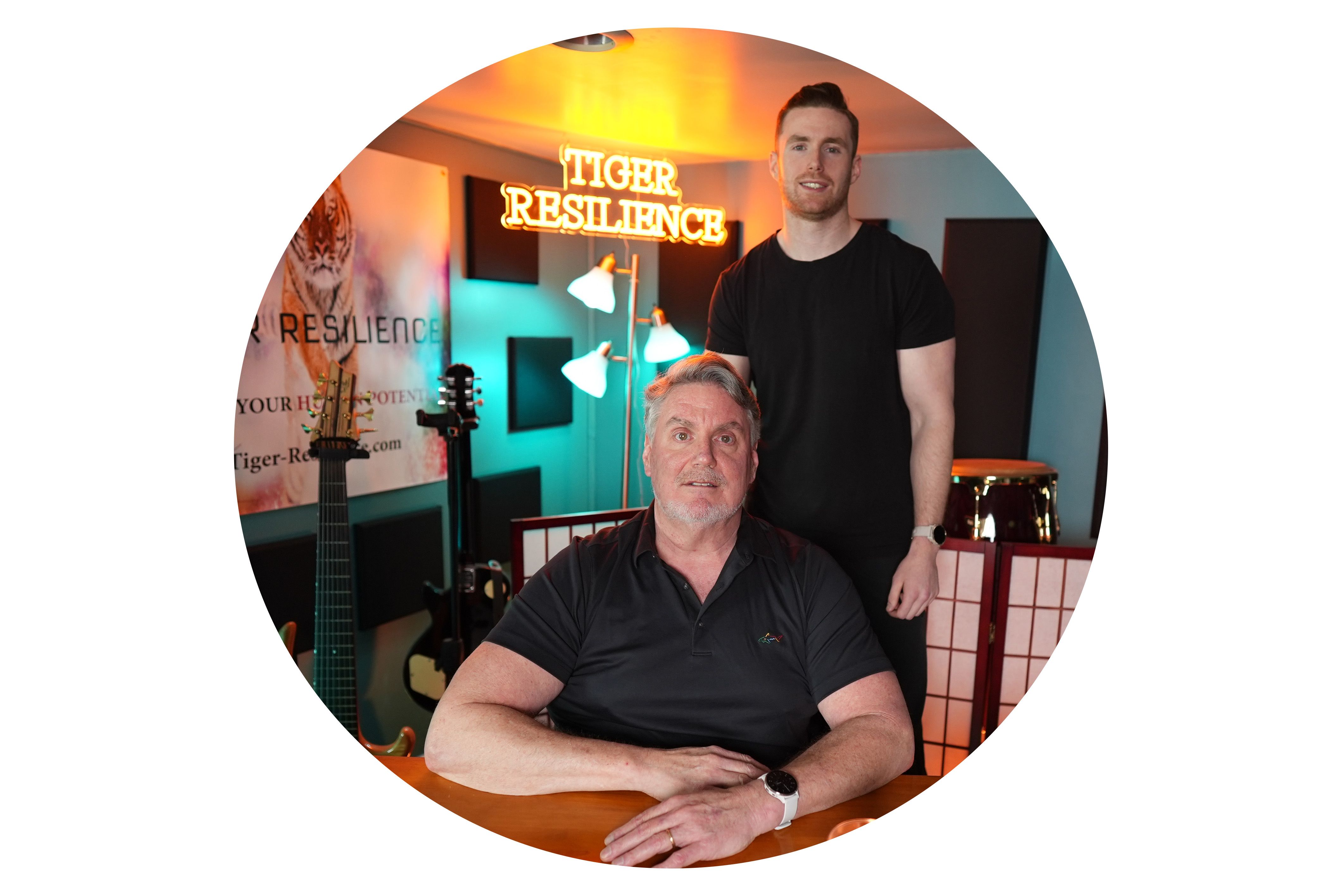
Bernie & Michael
Tiger Resilience
📚 References
Atherton, P. J., Smith, K., Etheridge, T., Rankin, D., & Rennie, M. J. (2010). Distinct anabolic signalling responses to amino acids in C2C12 skeletal muscle cells. Amino Acids, 38(5), 1533–1539. https://doi.org/10.1007/s00726-009-0377-x
Areta, J. L., Burke, L. M., Ross, M. L., Camera, D. M., West, D. W. D., Broad, E. M., ... & Coffey, V. G. (2013). Timing and distribution of protein ingestion during prolonged recovery from resistance exercise alters myofibrillar protein synthesis. The Journal of Physiology, 591(9), 2319–2331. https://doi.org/10.1113/jphysiol.2012.244897
Bauer, J., Biolo, G., Cederholm, T., Cesari, M., Cruz-Jentoft, A. J., Morley, J. E., ... & Boirie, Y. (2013). Evidence-based recommendations for optimal dietary protein intake in older people: A position paper from the PROT-AGE Study Group. Journal of the American Medical Directors Association, 14(8), 542–559. https://doi.org/10.1016/j.jamda.2013.05.021
Bilodeau, K. (2019, November 28). Will a purpose-driven life help you live longer? Harvard Health Blog. https://www.health.harvard.edu/blog/will-a-purpose-driven-life-help-you-live-longer-2019112818378
Boyle, P. A., Barnes, L. L., Buchman, A. S., & Bennett, D. A. (2009). Purpose in life is associated with mortality among community-dwelling older persons. Psychosomatic Medicine, 71(5), 574–579. https://doi.org/10.1097/PSY.0b013e3181a5a7c0
Breen, L., & Phillips, S. M. (2011). Skeletal muscle protein metabolism in the elderly: Interventions to counteract the ‘anabolic resistance’ of ageing. Nutrition & Metabolism, 8, 68. https://doi.org/10.1186/1743-7075-8-68
Chan, E. (2025, September 18). Top 100+ workplace diversity statistics: DEI progress & best practices. Second Talent. https://www.secondtalent.com/resources/workplace-diversity-statistics/
Deutz, N. E. P., Bauer, J. M., Barazzoni, R., Biolo, G., Boirie, Y., Bosy-Westphal, A., ... & Singer, P. (2014). Protein intake and exercise for optimal muscle function with aging: Recommendations from the ESPEN Expert Group. Clinical Nutrition, 33(6), 929–936. https://doi.org/10.1016/j.clnu.2014.04.007
Eagleman, D. (2011). Incognito: The secret lives of the brain. Pantheon.
Fuller, R. B. (1975). Synergetics: Explorations in the geometry of thinking. Macmillan.
Jung, C. G. (1953). Two essays on analytical psychology. Routledge & Kegan Paul.
Le Cunff, A.-L. (n.d.). Combinational creativity: The myth of originality. Ness Labs. https://nesslabs.com/combinational-creativity
McEwen, B. S., & Gianaros, P. J. (2011). Stress- and allostasis-induced brain plasticity. Annual Review of Medicine, 62, 431–445. https://doi.org/10.1146/annurev-med-052209-100430
Merriam-Webster. (n.d.). Synthesis. In Merriam-Webster.com dictionary. Retrieved November 9, 2025, from https://www.merriam-webster.com/dictionary/synthesis
Moore, D. R., Robinson, M. J., Fry, J. L., Tang, J. E., Glover, E. I., Wilkinson, S. B., ... & Phillips, S. M. (2009). Ingested protein dose response of muscle and albumin protein synthesis after resistance exercise in young men. American Journal of Clinical Nutrition, 89(1), 161–168. https://doi.org/10.3945/ajcn.2008.26401
Morton, R. W., Murphy, K. T., McKellar, S. R., Schoenfeld, B. J., Henselmans, M., Helms, E., ... & Phillips, S. M. (2018). A systematic review, meta-analysis and meta-regression of the effect of protein supplementation on resistance training-induced gains in muscle mass and strength in healthy adults. British Journal of Sports Medicine, 52(6), 376–384. https://doi.org/10.1136/bjsports-2017-097608
Murphy, T. F. (2018, December 18). The art of integrating emotions for personal growth. Psychology Fanatic. https://psychologyfanatic.com/integrating-emotions-for-personal-growth/
Pascoe, M. C., Thompson, D. R., & Ski, C. F. (2017). Yoga, mindfulness-based stress reduction and stress-related physiological measures: A meta-analysis. Psychoneuroendocrinology, 86, 152–168. https://doi.org/10.1016/j.psyneuen.2017.08.008
Phillips, S. M., & Van Loon, L. J. C. (2011). Dietary protein for athletes: From requirements to optimum adaptation. Journal of Sports Sciences, 29(S1), S29–S38. https://doi.org/10.1080/02640414.2011.619204
Priceonomics (Cima, R.). (2015, September 11). The correlation between arts and crafts and a Nobel Prize. https://priceonomics.com/the-correlation-between-arts-and-crafts-and-a/
Shaffer, F., & Ginsberg, J. P. (2017). An overview of heart rate variability metrics and norms. Frontiers in Public Health, 5, 258. https://doi.org/10.3389/fpubh.2017.00258
Siegel, D. J. (2012). The developing mind: How relationships and the brain interact to shape who we are (2nd ed.). Guilford Press.
Siegel, D. J. (2014, September 16). Brain insights and well-being. https://drdansiegel.com/brain-insights-and-well-being/
Stokes, T., Hector, A. J., Morton, R. W., McGlory, C., & Phillips, S. M. (2018). Recent perspectives regarding the role of dietary protein for the promotion of muscle hypertrophy with resistance exercise training. Nutrients, 10(2), 180. https://doi.org/10.3390/nu10020180
Tiger Resilience. (n.d.). Awaken the Tiger and Phoenix: Build your self-esteem journal. Amazon. https://www.amazon.com/Awaken-Tiger-Phoenix-build-Esteem/dp/B0DBRWTGS9
Thayer, J. F., Åhs, F., Fredrikson, M., Sollers, J. J., & Wager, T. D. (2012). A meta-analysis of heart rate variability and neuroimaging studies: Implications for heart rate variability as a marker of stress and health. Biological Psychology, 90(2), 125–134. https://doi.org/10.1016/j.biopsycho.2012.03.008
Wolf, G. (1996, February). Steve Jobs: The next insanely great thing. Wired, 4(2). https://www.wired.com/1996/02/jobs-2/
Wu, Z., Pandigama, D. H., Wrigglesworth, J., et al. (2023). Lifestyle enrichment in later life and its association with dementia risk. JAMA Network Open, 6(7), e2323690. https://doi.org/10.1001/jamanetworkopen.2023.23690 |
| | | |
|