|
| |
| |
| | |
|
Presence: The Skill That Brings You Back to Yourself
|
| | | |
| | |
| Welcome to Our Latest Newsletter!
📚 Read Time: 10 Minutes
Thanksgiving has passed here in the U.S., and for many people this weekend becomes a blur of noise, motion, and shifting gears. For our readers outside the States, thank you for being here as the season ramps up around you. No matter where you are, this time of year has a way of scattering attention. You can move through entire days without ever fully arriving in them.
Presence is the counterweight to that drift. It is not about slowing down for the sake of slowness. It is about showing up in real time, mind engaged, body aligned, awareness steady. In the context of mental and physical health, presence is a performance skill. It sharpens focus. It regulates stress. It anchors your decisions. It makes your training, relationships, and recovery mean something rather than just filling space.
This edition breaks down what presence actually is, how it works across the brain and body, and why it matters for anyone trying to build consistency, resilience, and long-term progress. We will look at the research behind attention and engagement, the cost of living on autopilot, and how presence shows up in training when it matters most. You will also get practical strategies for strengthening presence so it becomes a daily baseline instead of an occasional moment.
🔗 Want to revisit past editions or share with someone who could use this?
Check out the full Tiger Resilience archive and share to sign up for future newsletters here:
👉 Explore the Tiger Resilience Newsletter Library |
| | | |
| | |
| What Is Presence?
Presence is the state of having your mind, body, and attention fully engaged in the moment you are in. It is not a slowed-down lifestyle idea. It is a performance skill that sharpens awareness, stabilizes emotion, and improves how you think, move, and respond.
Presence shows up across four core dimensions:
• Cognitive:
Your attention stays on the task instead of drifting into past or future thinking. In the brain, this looks like reduced activity in the default mode network (mind wandering) and stronger activation of the executive regions responsible for focus and working memory. You feel clearer, steadier, and more tuned into what is happening right now.
• Emotional:
You recognize what you are feeling as it arises without avoiding, suppressing, or exaggerating it. This supports emotional regulation because the prefrontal cortex stays online while the amygdala (threat and reactivity) stays quieter. You respond instead of react.
• Physical:
Your body is involved, not checked out. You notice breathing, posture, effort, and feedback in real time. Research shows that this engaged awareness improves motor control, reduces wasted movement, and strengthens the mind-body connection in training.
• Spiritual:
Presence brings a sense of alignment. Your actions reflect your values and the moment feels meaningful rather than mechanical. It is not mystical. It is simply the experience of being connected to what you are doing.
Presence is not about staying perfectly focused. It is about noticing when you drift and returning. Each return is a repetition, and those repetitions build a more attentive, grounded, and resilient way of moving through the world. |
| | | |
| | |
| Michael’s Perspective: Presence Is the Foundation of Health, Not Perfection
Every year around Thanksgiving the same cycle hits social media. People start fear-mongering about how a single plate of food is going to ruin your health, derail your goals, or undo months of work. It is predictable, and it is always wrong. A day of eating more than usual does not break anything. If anything, it gives you more fuel to move, lift, or run the next day if you want to.
What bothers me most is not the nutrition misinformation. It is the way health and fitness content increasingly revolves around bait, extremes, and certainty. The algorithm rewards the loudest and most polarizing voices, not the most grounded ones. Sarcasm gets treated like advice. Absolutes get treated like science. And people start second-guessing normal, human experiences like enjoying a holiday meal with their family.
If we are going to talk about health honestly, we can acknowledge two things at the same time.
One. The obesity crisis is real, and food-centric holidays can be complicated for people with a long history of emotional eating or chronic dysregulation.
Two. That does not make Thanksgiving the enemy. A single day is not the problem. The issue is everything that surrounds it. The daily habits. The lack of movement. The chronic stress. The absence of sleep. The emotional drift. The cycle of checking out, waking up frustrated, and repeating it.
This is where presence matters more than anything else. Presence is what keeps your decisions tied to reality instead of anxiety. When you are actually present, you can enjoy a meal without spiraling into guilt. You can pay attention to hunger and fullness. You can notice how food feels in your body. You can connect with people at the table instead of performing for social media afterward. Presence regulates the stress response in real time. It stabilizes impulsivity. It keeps you grounded enough to make the next right decision when the moment comes.
The same principle shows up in training. Presence is the foundation of physical performance. When your attention drifts toward how you look, how you compare, or how others perceive you, your performance drops. This has a physiological explanation. The moment attention gets pulled outward, the prefrontal cortex gets overloaded, motor control becomes less efficient, and your brain stops filtering signals cleanly. Athletes feel this instantly. You lose stride rhythm. You lose bar speed. You tense up and start fighting your own mechanics.
When you anchor your attention to the process, everything improves.
• Motor unit recruitment becomes smoother.
• Breathing stays steadier.
• RPE becomes more accurate.
• Pacing stabilizes because you’re actually feeling the work instead of imagining it.
• Fatigue signals become information instead of threat.
Presence keeps the system integrated. It keeps you connected to what you’re doing instead of how you appear doing it.
And it is no different in life. When your attention is external for too long, your connection weakens. First to your own body. Then to your emotions. Then to the people around you. Presence is not about being calm. It is about being available. It is about being aware enough to show up intentionally instead of drifting into habits that build resentment, stress, or self-judgment.
Thanksgiving is not about perfect nutrition. It is about stepping back into presence with the people in your life. Sharing food. Laughing. Remembering that relationships are a core pillar of health. A regulated nervous system, stable emotional bonds, and a sense of connection do more for long-term health outcomes than any single meal ever could.
One day of eating differently is not the issue.
Losing presence day after day is.
The work is not to micromanage holidays.
The work is to build a life where presence shapes your habits, your training, your nutrition, your recovery, and your relationships.
The best performers in any domain anchor themselves in process, not applause. They stay connected to what matters. They show up with attention instead of anxiety. They return to the moment instead of getting lost in distraction.
Presence is not soft. It is skill. And it is the starting point for every meaningful change you want to make. |
| | | |
| | |
| Bernie's Perspective: Presence in the Moments That Change Us.
A belated happy Thanksgiving to all our readers! Here at Tiger Resilience, we wish you nothing but peace, health, and happiness. I have often shared my mantra, “Tempus fugit,” a reminder that time flies. This phrase keeps me grounded, reminding me of the limited days we have in our lifetimes.
Recently, I experienced significant events that highlight the contrast between the swift passage of time and the stillness of meaningful moments. On November 16th, I faced a near-death experience, followed by the joyful occasion of my son Michael’s wedding, a beautiful ceremony deeply rooted in Hindu culture. These moments culminated on Thanksgiving, bringing our new families together in a celebration of gratitude, surrounded by friends, loved ones, and a delicious meal prepared by my wife, Valerie, who has a remarkable gift for creating memorable Thanksgiving dinners.
Reflecting on the quick passage of time versus the stillness of these moments, I realize how quickly the last few weeks have gone by. Yet, the moments of truth we encounter during life-altering events—like my near-death experience and Michael’s new chapter—have profoundly shifted my perspective and Valerie's. We find ourselves in new roles, transformed in just two weeks.
This contrast has shown me that slowing down and being present are no longer mere concepts; they are essential. Each day, I awaken with a fresh view of the world, shaped by these recent experiences. Being in the moment has become crucial. The gift of life allows me to truly reflect, absorb, and appreciate the value of each moment because I am here, participating fully.
As we move into the new year with Tiger Resilience, we look forward to sharing our insights and experiences. We hope others can find inspiration in these reflections, especially if you face significant challenges, feel uncertain about your next steps, or race toward the future without truly being present.
Today, I challenge you to look within and recognize that the present moment is the greatest gift. Material obsessions, status, and vanity fade in comparison to the profound moments that truly matter. |
| | | |
| | | |
| | |
| The Science of Presence: Brain and Body
Presence is more than a mindset. It is a measurable shift in how the brain and body operate. When you are present, several systems reorganize in ways that support focus, regulation, and performance.
🧠 Brain: Attention, Networks, and Neurochemistry
• Quieting the default mode network:
The default mode network is the brain circuit responsible for mind-wandering and self-referential thinking. When you focus on the present, activity in this network decreases. Studies on long-term meditators show significantly lower default mode activation and stronger connectivity with attention-regulation regions. This is why presence feels clear rather than noisy.
• Strengthening executive control:
Present-moment focus increases activation in the prefrontal cortex, the system responsible for working memory, decision-making, and sustained attention. This shift creates sharper cognitive control and less drift during tasks.
• Stress chemistry down-regulates:
Presence activates parasympathetic pathways. Cortisol drops, heart rate variability improves, and the body shifts out of threat mode. Even short daily mindfulness practices have been shown to reduce baseline cortisol and improve regulation under stress.
• Neuroplastic changes occur:
Consistent present-moment training can reshape the brain. Research shows increased gray matter in the hippocampus and regions tied to learning, memory, and emotion regulation after an eight-week practice cycle. The amygdala, linked to fear and reactivity, often becomes less dense over time.
🩺 Body: Nervous System, Coordination, and Recovery
• Better nervous system regulation:
Presence keeps the sympathetic system from running too hot. Breathing stabilizes, and the heart responds more flexibly. This creates a physiological state where performance and recovery both improve.
• Improved movement efficiency:
When your attention is connected to your body, motor control tightens. You notice form, cues, and pacing in real time. Studies show that intention-focused attention can improve muscle activation and reduce unnecessary energy expenditure.
• Reduced emotional overload:
Being present allows the prefrontal cortex to regulate emotion before it becomes overwhelming. Emotional responses become more measured because the brain processes signals as they happen rather than after they have spiraled.
• Enhanced immune and inflammation profiles:
Mindfulness-based presence has been linked with lower inflammatory markers and improvements in immune function. These effects come from lowering chronic stress activation and supporting parasympathetic balance.
Presence is not abstract. It is a full-system realignment where the brain becomes quieter and more focused, the body becomes calmer and more efficient, and the stress response becomes manageable rather than constant. |
| | | |
| | | |
| | | |
| | |
| Presence by the Numbers
Here are some of the clearest findings that show why presence matters in daily life, training, and performance.
• 46.9 percent
The portion of your waking life your mind is not focused on what you are doing. In the study that uncovered this, mind-wandering was consistently linked with lower happiness, no matter the activity.
• 18.7 percent
The improvement in sustained attention after six weeks of daily mindfulness practice. Participants also showed meaningful reductions in cortisol, reflecting stronger stress regulation.
• 8 weeks
The time required to physically reshape parts of the brain related to learning, memory, and emotional regulation through present-moment attention. MRI studies show increased gray matter density after an eight-week mindfulness program.
• 205 times per day
The average number of times Americans check their phone. This constant pull on attention makes sustained presence significantly more difficult, especially during training and recovery.
Presence is not an abstract ideal. These numbers show how often attention slips away, how quickly it can improve with practice, and how relentlessly modern life competes for it. |
| | | |
| | | |
| | |
| Tiger Resilience Lens: Presence vs Autopilot
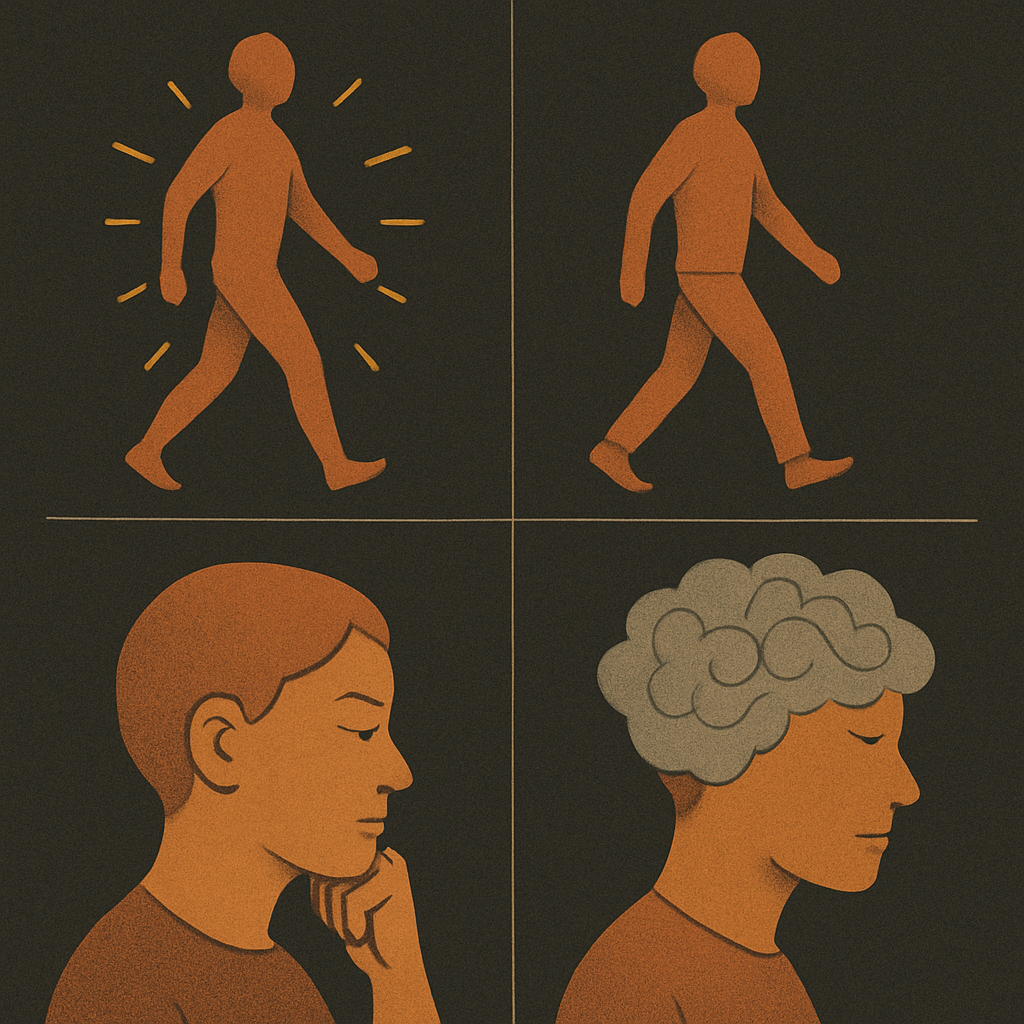
Presence and autopilot are both natural states, but they shape your life in very different ways. Presence moves you forward. Autopilot keeps you coasting. The key is knowing which mode you are in and how each one affects your development.
|
Domain
|
Presence
|
Autopilot
|
|
Body
|
You feel what your body is doing. Breathing, posture, pacing, and form stay connected. You respond to feedback in real time. Movement becomes efficient instead of wasteful.
|
You move mechanically. You miss cues, slip into poor form, or ignore stress signals. Injuries and fatigue accumulate quietly because awareness is offline.
|
|
Mind
|
Attention stays with the task. The executive regions of the brain stay active, and distractions lose their pull. Learning improves and decisions sharpen.
|
Thoughts drift. The default mode network runs the show, pulling you into past and future thinking. Tasks feel foggy, and productivity drops even when effort increases.
|
|
Heart
|
You are emotionally tuned in. You recognize what you feel and can respond with clarity. Conversations deepen because you are actually listening.
|
Emotion becomes background noise. You disconnect, suppress, or miss what is really happening. Relationships feel flat because you are present in body but not in awareness.
|
|
Spirit
|
Your actions align with your values. There is a sense of meaning, direction, and engagement. The moment feels connected to something larger.
|
Days blur together. You operate on routines without intention or purpose. Life feels mechanical, and direction becomes unclear.
|
What matters: Presence is where growth happens. Autopilot is where things stagnate. Presence gives you real information about your body, emotions, and direction. Autopilot keeps you moving but without intention.
The danger: Mistaking autopilot for stability. It feels familiar and efficient, but over time it creates drift. You wake up realizing you were not truly involved in the moments that mattered.
The goal: Use presence for anything meaningful. Use autopilot sparingly. Train the awareness to notice when you have drifted and return. That cycle builds clarity, regulation, and resilience. |
| | | |
| | | |
| | |
| Michael’s Training Corner: How to be Present in exercise
Part 1: Presence in Training and Why It Matters
One theme I see in almost everyone’s training, including my own, is that the biggest gap is rarely effort. It is attention. People show up physically but train mentally absent. And once you drift, the quality of the session drops no matter how good the plan looks on paper.
Presence is a performance skill. When you’re mentally engaged, several things happen that directly affect the outcome of the session:
• Motor unit recruitment improves
Being attentive increases the nervous system’s ability to fire the right motor units during a lift or stride. More high-threshold motor units come online when you’re actually connected to what the movement should feel like.
• Movement efficiency increases
A present athlete makes micro-adjustments in real time. You dial in breathing, foot strike, bar path, posture, and pacing. Waste drops. Efficiency rises.
• Rate of perceived exertion becomes more accurate
Most people misjudge effort when they are distracted. Presence stabilizes internal pacing and lets you hold target intensity rather than oscillating between too hard and too easy.
• Technique holds up under fatigue
This is the big one. Fatigue exposes whether someone is mentally checked in. Presence allows you to maintain form in the exact moments it usually collapses.
• Discomfort becomes data, not distress
When you stay plugged into the rep or interval, the sensation of effort is something you can work with. When you mentally exit, discomfort feels like threat, not feedback.
This is why presence is not optional for progression. It is the differentiator between accumulating volume and performing intentional work.
Practical presence in training looks simple:
• Set a single technical focus before the session
For example, “smooth bar path,” “relaxed shoulders,” or “steady breathing.” One cue keeps your mind anchored.
• Reduce external distraction
Phone away. Minimal scrolling between sets. Background noise is fine. Overstimulation is not.
• Let sensory cues guide you
Breath rhythm, foot contact, bar speed, stride length, tension levels. Use the body as the anchor.
• Return to the moment each time you drift
Presence is not staying locked in perfectly. It is catching the mind wandering and coming back.
Training with presence is training with agency. It is the difference between doing work and developing capacity.
Part 2: Consistency, Deconditioning, and the Cost of Drift
Presence also applies to the long-term arc of training. If Part 1 is about staying mentally engaged inside a single session, Part 2 is about what happens when you drift across weeks and months. Physiology does not pause when life gets busy.
Here is what the research shows:
• VO₂ max begins declining in as little as 12–14 days
Typically a 5–7 percent drop in the first two weeks without aerobic stimulus.
• Aerobic enzymes regress quickly
Mitochondrial density, capillary function, and oxidative enzymes begin falling toward baseline within three to six weeks.
• Neuromuscular adaptations fade
Motor unit synchronization and firing frequency decrease when strength work stops. This affects bar speed, coordination, and power output.
• Muscle fiber size decreases
Hypertrophy adaptations begin reversing around the three-week mark without stimulus, especially in fast-twitch dominant muscle groups.
• Strength falls slower than endurance but still falls
Maximal strength tends to hold better, but power and speed decline quickly because they rely heavily on neural efficiency.
• Psychological friction increases
Momentum drops. The identity of “someone who trains” becomes harder to access. Restarting feels heavier than it should.
The important point is this: deconditioning is not punishment. It is biology responding to a missing signal. Which means the counter is simple, keep the signal alive.
Even minimal training protects most of your adaptations:
• One to two resistance sessions per week can maintain strength and muscle
Research consistently supports this maintenance threshold when effort is moderate to high.
• Two aerobic sessions a week can preserve the majority of endurance capacity short term
They do not need to be long. They need to be intentional.
• Technique retained through micro-exposure
Even one short technical session per week helps maintain motor patterns that would otherwise slip. |
| | | |
| | | |
| | | |
| | |
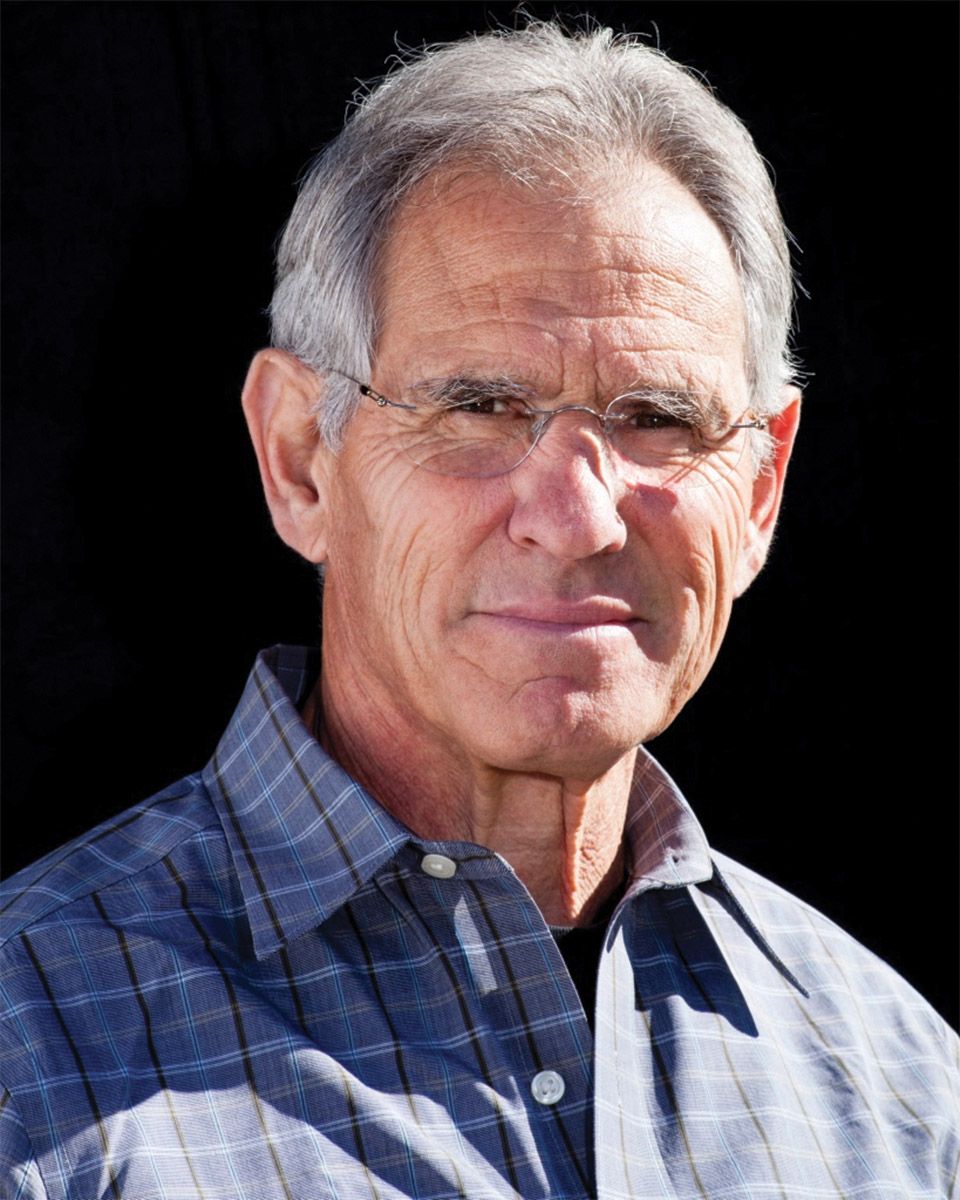
| Real-World Spotlight: Jon Kabat-Zinn and the Discipline of Being Here
When people talk about presence in a scientific or performance context, they are often echoing ideas shaped by the work of Jon Kabat-Zinn. He is a molecular biologist trained at MIT who brought mindfulness into medicine and performance long before it was popular. What made his approach different was how direct and usable it became. He defined presence as paying attention to the moment on purpose, without judgment, and then proved that this simple skill could change how the brain and body function.
Kabat-Zinn built his work on a few core ideas that apply directly to resilience and performance:
• Presence is a trainable skill
Not a personality trait. Not something you are born with. Through repeated practice, people can increase their capacity to stay focused and grounded under stress.
• Attention regulates physiology
When attention stabilizes, the stress response calms. The prefrontal cortex stays online. The amygdala quiets. Cortisol drops. Presence creates a biological environment where performance and emotional control improve.
• Awareness improves pain and discomfort tolerance
Kabat-Zinn showed that patients with chronic pain could reduce suffering by staying present with sensation instead of resisting or catastrophizing. For athletes, this mirrors staying present during effort instead of mentally checking out when discomfort rises.
• The mind-body connection is not conceptual. It is measurable
Mindful presence alters brain networks, changes gray matter density, improves immune markers, and reduces inflammation. Kabat-Zinn provided the framework for understanding presence as a physiological skill, not a philosophical idea.
• Practical presence beats idealized presence
Kabat-Zinn encouraged people to work with the moment exactly as it is. No perfect conditions. No waiting for calm. Presence means meeting your current reality with awareness and intention.
Across decades of research and clinical work, he demonstrated something simple but powerful: presence is how you reclaim control of your attention in environments that constantly compete for it. That skill improves performance, communication, emotional regulation, stress recovery, and the ability to stay aligned with your values under pressure.
His influence now shows up in sport psychology, military training, chronic pain treatment, and organizational leadership. The common thread is the same. When you return attention to the moment you are in, you regain access to clarity, stability, and choice. That is the foundation of resilience. |
| | | |
| | | |
| | | |
| | |
| Journal Exercise: Practicing Presence in Real Time
Presence grows through small, repeatable moments where you bring your attention back to what is actually happening. This exercise helps you identify where you drift, why it happens, and how to return with intention. Take your time with each step.
1. Identify a Moment Where You Drifted This Week
Think of a recent moment where your mind checked out: during a run, a lift, a conversation, a meal, or even downtime.
Write down:
• What you were doing
• When you noticed you were no longer present
• What your mind drifted toward
2. Describe the Cost of That Drift
Presence always has a purpose, and absence always has a cost.
Ask yourself:
• What did I miss by not being fully there
• Did the quality of the moment drop
• Did I feel more stressed, bored, impatient, or disconnected afterward
3. Notice the Triggers
Every drift has a pattern.
Identify what pulled your attention away:
• Internal noise (overthinking, worry, planning)
• External noise (phone, people, notifications)
• Fatigue or emotional overload
Naming the trigger makes it easier to interrupt in the future.
4. Practice a Single Moment of Presence
Choose an everyday moment in the next 24 hours where you will deliberately practice being fully present.
Options can include:
• A meal
• A conversation
• A warmup or cooldown
• A set in the gym
• The first mile of a run
Write down exactly when and how you will practice presence in that moment.
5. Anchor What Presence Felt Like
After you do it, come back to this prompt.
Reflect on:
• What changed when I stayed connected
• What I noticed that I usually ignore
• How the moment felt different compared to autopilot
This is how awareness becomes skill.
Presence is built in these small reps. Each time you return to the moment, you strengthen the part of you that chooses clarity over drift.
For more structured prompts, daily reflection space, and guided exercises to build confidence and consistency, explore the journal that pairs with our resilience work.
👉 Awaken the Tiger and Phoenix Self-Esteem Journal
https://www.amazon.com/Awaken-Tiger-Phoenix-build-Esteem/dp/B0DBRWTGS9 |
| | | |
| | | |
| | |
| Final Thoughts: Presence and the Five Pillars
Presence is not about stillness or slowing life down. It is about returning to the moment you are actually living. It is the ability to feel your body, engage your mind, regulate your emotions, and stay connected to your values instead of drifting through the day on autopilot. When presence becomes a habit, everything in your life becomes more deliberate. Your training sharpens. Your relationships deepen. Your decisions stabilize. You move through the world with more intention and less noise.
This is where the Five Pillars step in. Presence brings each one to life.
Purpose
Presence reveals whether your actions match what matters to you. When you are paying attention, you can tell immediately if you are aligned or moving through habit. Purpose becomes clearer because you are actually present for the choices you make.
Planning
A plan only works if attention is attached to the execution. Presence is what lets you follow the structure you built for yourself instead of drifting into distraction. When you are present with your plan, you make adjustments based on reality, not impulse.
Practice
Every rep of presence strengthens the same circuits that support learning, awareness, and resilience. Practice becomes intentional instead of mechanical. Whether in training, communication, or self-regulation, presence turns repetition into development.
Perseverance
Staying present during discomfort is one of the deepest forms of perseverance. You meet effort with awareness instead of avoidance. This is where skill, discipline, and mental toughness actually build. You stay connected long enough for growth to happen.
Providence
Presence gives you the clarity to recognize opportunities when they show up. You are not buried in noise. You are not lost in autopilot. You are steady and aware, which lets you move with both trust and intention when life shifts around you.
Presence is not perfection. It is the willingness to return to the moment again and again. The more you do, the more your life reflects clarity instead of drift, direction instead of noise, and intention instead of habit. That is resilience in real time.
Stay Resilient,
Bernie & Michael
Tiger Resilience
📚 References
Brewer, J. A., Worhunsky, P. D., Gray, J. R., Tang, Y. Y., Weber, J., & Kober, H. (2011). Meditation experience is associated with differences in default mode network activity and connectivity. Proceedings of the National Academy of Sciences, 108(50), 20254–20259.
https://doi.org/10.1073/pnas.1112029108
Bruder, M., Dossett, E., & Duan, A. (2023). Digital distraction and attentional load across daily life: A large-scale behavioral tracking study. Journal of Experimental Psychology: General, 152(4), 913–931.
https://doi.org/10.1037/xge0001328
Coyle, E. F., & Joyner, M. J. (2021). VO₂max, aerobic fitness, and the athlete’s physiology. Journal of Physiology, 599(9), 2941–2952.
https://doi.org/10.1113/JP279963
Csikszentmihalyi, M. (1990). Flow: The psychology of optimal experience. Harper & Row.
https://www.harpercollins.com/products/flow-mihaly-csikszentmihalyi
Evans, A., & Tierney, S. (2019). Mindful presence and emotional regulation: A review of neurobiological mechanisms. Frontiers in Psychology, 10, 1171.
https://doi.org/10.3389/fpsyg.2019.01171
Gonzalez, A. M., Mangine, G. T., Fragala, M. S., Stout, J. R., & Hoffman, J. R. (2015). Resistance training and neuromuscular adaptations: Mechanisms and practical applications. Journal of Strength and Conditioning Research, 29(3), 783–791.
https://doi.org/10.1519/JSC.0000000000000706
Hölzel, B. K., Carmody, J., Vangel, M., Congleton, C., Yerramsetti, S. M., Gard, T., & Lazar, S. W. (2011). Mindfulness practice leads to increases in regional brain gray matter density. Psychiatry Research: Neuroimaging, 191(1), 36–43.
https://doi.org/10.1016/j.pscychresns.2010.08.006
Kabat-Zinn, J. (1994). Wherever you go, there you are: Mindfulness meditation in everyday life. Hyperion.
https://www.amazon.com/Wherever-You-Go-There-Are/dp/1401307787
Kabat-Zinn, J. (2013). Full catastrophe living: Using the wisdom of your body and mind to face stress, pain, and illness (Revised ed.). Bantam.
https://www.penguinrandomhouse.com/books/94004/full-catastrophe-living-revised-edition-by-jon-kabat-zinn/
Kabat-Zinn, J., Lipworth, L., & Burney, R. (1985). The clinical use of mindfulness meditation for the self-regulation of chronic pain. Journal of Behavioral Medicine, 8(2), 163–190.
https://doi.org/10.1007/BF00845519
Killingsworth, M. A., & Gilbert, D. T. (2010). A wandering mind is an unhappy mind. Science, 330(6006), 932.
https://doi.org/10.1126/science.1192439
McEwen, B. S. (2007). Physiology and neurobiology of stress and adaptation. Physiological Reviews, 87(3), 873–904.
https://doi.org/10.1152/physrev.00041.2006
Millet, G. P., & Millet, G. Y. (2012). Deconditioning and loss of performance: A review. Sports Medicine, 42(7), 537–549.
https://doi.org/10.2165/11634050-000000000-00000
Pereira-Pedro, A. S., & Brans, R. G. (2022). Attentional control, executive function, and the neural basis of presence. Neuroscience & Biobehavioral Reviews, 137, 104646.
https://doi.org/10.1016/j.neubiorev.2022.104646
Reid, K. J., Baron, K. G., Lu, B., Naylor, E., Wolfe, L., & Zee, P. C. (2021). Daily technology use and attentional fragmentation. Sleep Health, 7(4), 495–501.
https://doi.org/10.1016/j.sleh.2021.04.005
Rolls, E. T. (2019). The emotion system, the prefrontal cortex, and emotional regulation. Cognitive Neuropsychiatry, 24(3), 146–164.
https://doi.org/10.1080/13546805.2019.1664887
Ross, A., & Thomas, S. (2010). The health benefits of mindfulness and yoga: A review of the evidence. Journal of Alternative and Complementary Medicine, 16(1), 3–12.
https://doi.org/10.1089/acm.2009.0340
Seiler, S., & Tønnessen, E. (2009). Intervals, thresholds, and long slow distance: Training intensity distribution and endurance performance. Sports Science, 13, 32–53.
https://www.researchgate.net/publication/285750469
Shaw, I., & Shaw, B. (2009). Consequences of training cessation and tapering on performance. Journal of Sports Science and Medicine, 8(3), 343–350.
https://www.ncbi.nlm.nih.gov/pmc/articles/PMC3761860/
Tang, Y. Y., Hölzel, B. K., & Posner, M. I. (2015). The neuroscience of mindfulness meditation. Nature Reviews Neuroscience, 16(4), 213–225.
https://doi.org/10.1038/nrn3916
Van der Zwaag, W., Da Costa, S. E., & Nichols, T. E. (2021). Attention, working memory, and the prefrontal cortex: A quantitative functional MRI review. Human Brain Mapping, 42(15), 4902–4923.
https://doi.org/10.1002/hbm.25590
Wenger, H. A., & Bell, G. J. (1986). The interactions of intensity, frequency, and duration of training in altering cardiorespiratory fitness. Sports Medicine, 3(5), 346–356.
https://doi.org/10.2165/00007256-198603050-00004
Williams, M., & Penman, D. (2011). Mindfulness: An eight-week plan for finding peace in a frantic world. Rodale.
https://www.amazon.com/Mindfulness-Eight-Week-Finding-Frantic-World/dp/1609611985 |
| | | |
|